A gemstone begins with a decision.
In the late 1970s, Thomas Leyser and his cousin Karl-Heinz sat across from dealers examining parcels of rubies and sapphires. There were no laboratory reports on the table. The decision rested on what they could see, what they had seen before, and whom they trusted.
Much has changed since. Today, laboratory reports can establish origin, treatments and many of the characteristics that define a stone. They have become an essential part of the trade.
But a report cannot tell you whether one ruby is more beautiful than another. It cannot judge the particular balance of colour, saturation, transparency and character that makes one stone worth pursuing and another worth leaving behind.
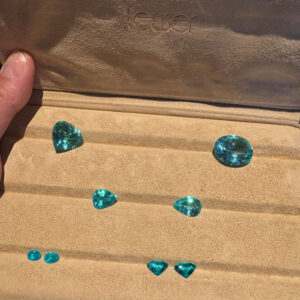
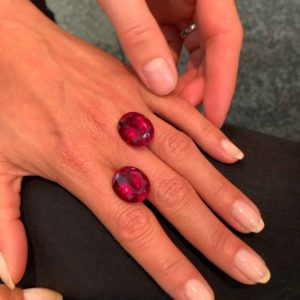
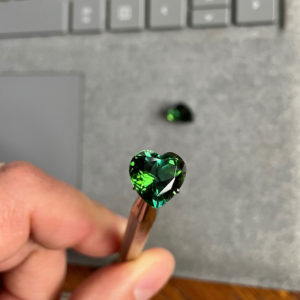
That part still happens much as it always has: stone in hand, preferably in daylight.
Thirteen generations in Idar-Oberstein. Still choosing one stone at a time.